
Deregulating Utilities: Considerations for American Urban Governance

Deregulating Utilities: Considerations for American Urban Governance.
Deregulated electric markets have been heralded as a means to enhance efficiency, reduce costs, and encourage innovation. The experiences of states in the U.S. Midwest—particularly Ohio, Illinois, and Pennsylvania—offer a window into the complexities and consequences of such reforms. By analyzing the outcomes of deregulation, this essay highlights key considerations for urban areas grappling with rising energy demands, environmental sustainability, and economic equity.
The Promise and Pitfalls of Deregulation.
In the early 20th century, investor-owned electric utilities operated as regulated monopolies under the premise that economies of scale would lower costs and benefit consumers. However, technological advancements and environmental pressures began to challenge this model. By the late 20th century, smaller, more efficient generators became viable, eroding the decades-old natural monopoly argument for power generation. Advocates of deregulation contended that competitive markets would curb utility pricing power and deliver cost savings to consumers.
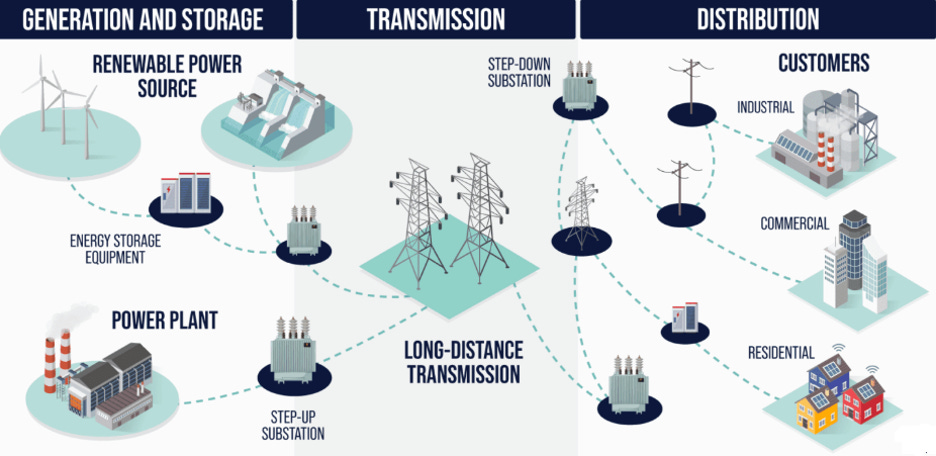
The Energy Policy Act of 1992 and subsequent Federal Energy Regulatory Commission (FERC) orders initiated wholesale market competition, separating power generation from transmission and distribution. States like Ohio embraced these changes, restructuring their markets to allow consumers to choose electricity providers while utilities retained control of delivery infrastructure.
Case Study: Ohio’s Deregulation Experience.
Ohio’s experience illustrates both the benefits and challenges of deregulation. A November 2024 report by Cleveland State University found that, since 2011, deregulation has saved Ohio consumers over $37 billion, averaging nearly $3 billion annually, or about $261 per household each year. These savings suggest substantial and sustained benefits.
However, these gains have been offset by utility-driven revenue-shifting strategies. Regulated portions of consumer bills—such as distribution charges and mandatory riders—increased, diminishing the net benefits of deregulation. The Public Utilities Commission of Ohio (PUCO) approved provisions allowing utilities to recoup lost revenues through these charges, which were often unrelated to the core costs of electricity generation or delivery. Between 2016 and 2018, the regulated share of retail electricity prices in Ohio rose from 35% to 43%.
Ohio’s regulatory framework has also faced significant challenges due to political and regulatory capture by utilities. The 2019 passage of House Bill 6 (HB6)—later implicated in a high-profile bribery scandal—highlighted vulnerabilities in the state’s oversight mechanisms. A $60 million corruption scheme led to the arrests of former Ohio House Speaker Larry Householder, the PUCO chairman, and several energy executives, revealing how weak oversight can enable market manipulation.
HB6 funneled billions in ratepayer-funded subsidies to aging coal and nuclear plants, stifling competition from renewable energy and burdening consumers with additional costs. The scandal remains a cautionary tale. In 2024, FirstEnergy agreed to a $100 million settlement with the Securities and Exchange Commission over its role in the bribery scheme, underscoring the ongoing need for robust oversight and transparency in utility governance.
Conflicting Evaluations of Deregulation’s Impact.
Supporters of deregulation argue that competition fosters efficiency by incentivizing investment in lower-cost generation technologies, ultimately benefiting consumers. However, Ohio’s experience suggests that without strong regulatory safeguards, entrenched utilities can undermine these market forces to maintain their revenue streams.
Assessing deregulated markets is complicated by competing studies with divergent conclusions. Some analysts estimate significant consumer savings by comparing actual prices to hypothetical regulated scenarios, while others contest these findings by focusing on residential price offers rather than actual consumer costs. These methodological differences illustrate how contrasting analytical approaches shape policy narratives, sometimes leading to misinterpretations by the media and policymakers.
A recent Ohio State University study analyzed a decade's worth of retail electricity supplier offers and found that most available options led consumers to pay inflated prices. While the study effectively documented how consumers often face confusing contracts resulting in higher-than-necessary prices, critics argue that it failed to account for competitive market forces that, over time, drive prices toward equilibrium. The study rightly identified misleading marketing practices as an area requiring consumer protection but did not fully address how competition has narrowed price differentials or how regulatory barriers have hindered market entrants, allowing utilities to suppress competition.
Aligning Deregulation with Urban Priorities.
Urban policymakers must ensure that low-income households are not disproportionately burdened by cost-shifting practices or excluded from competitive market benefits. While competition could have lowered electricity costs across Ohio, much of its financial advantage accrued to utility shareholders and executives rather than to ratepaying households and businesses.
Deregulation highlights the tension between market efficiency and consumer protection. While it can drive down the costs of generating, transmitting, and distributing electricity, ensuring that its benefits extend beyond private utilities and their shareholders requires active engagement from citizens and elected officials.
Cities like Los Angeles, Chicago, and New York demonstrate alternative, locally-initiated models that emphasize municipal-led renewable energy and regulatory oversight. These approaches contrast with market-driven strategies that, in some cases, have led to corruption scandals, consumer price volatility, and environmental and energy injustices.
For example, Los Angeles’ transition to 100% renewable energy integrates environmental justice considerations, prioritizing communities historically burdened by pollution and limited access to clean energy. Similarly, Chicago is piloting programs that integrate renewable energy into public housing, reducing utility costs for residents while enhancing grid resilience. Meanwhile, New York City’s Climate Mobilization Act, a key component of its strategy to achieve carbon neutrality by 2050, demonstrates how cities can balance sustainability goals with economic and social equity through collaborative policymaking.
Technological innovations—from solar microgrids to battery storage—can also help cities achieve sustainability goals through decentralized electricity generation. Several states, including California, Hawaii, and Arizona, have embraced these systems, while others, such as Texas and Colorado, are seeing increased adoption driven by deregulated markets and community solar programs.
Conclusion.
While state-level deregulation shapes electricity markets, urban governments play a critical role in ensuring consumer protections, fostering community energy programs, and integrating local renewable energy initiatives to mitigate deregulation’s unintended consequences.
Deregulation’s mixed outcomes highlight the need for adaptive regulatory frameworks. By mandating transparency in utility pricing and tying regulatory incentives to performance metrics—such as emissions reductions or energy efficiency—urban areas can better align market incentives with public priorities. The ongoing debates over deregulation underscore the importance of rigorous, transparent analysis.
Ohio’s HB6 scandal exemplifies the dangers of weak regulatory safeguards and the potential for political manipulation. To ensure that deregulation benefits consumers rather than entrenched utilities, cities should advocate for municipal electricity programs, stricter oversight of retail electricity contracts, and policies that promote local renewable energy generation to reduce dependence on legacy utility structures.
As of February 2025, Ohio lawmakers are actively engaging in energy policy reforms. The Ohio Senate's Energy Committee is reviewing Senate Bill 2, designed to encourage new investments in the state's electricity market. This legislative activity reflects a continued effort to refine the state's approach to energy regulation and address past challenges.
Deregulated electric markets offer valuable lessons for American urban governance. While competition can drive efficiency and innovation, its success depends on equitable regulatory frameworks and robust oversight. Ensuring these protections aligns with the interests of urban citizens and consumers. By addressing these challenges, cities can refine energy policies to better balance economic growth, environmental sustainability, and social equity, leveraging market strengths while safeguarding the public interest.
Bill Bowen